

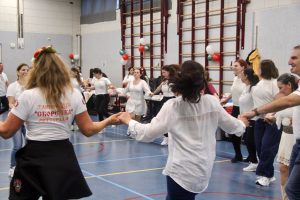
Rotterdam is undoubtedly home to a multitude of unique cultures. This diversity has naturally given rise to regional associations which help expats maintain a strong connection to their homeland. “Sborenka Rotterdam” is a perfect example of this – a Bulgarian dance club formed in 2021 and led by choreographer Plamena Leone. You might be wondering, what even is Bulgarian dance?
If you’ve ever witnessed a Balkan wedding or know the Dabke, you’ve already grasped the main concept. In the traditional ‘Horó’ dance, everyone holds hands in a circle and usually follows uncommon rhythms with their steps. The different dance versions are divided into ethnographic regions and often represent the craft each area once specialized in. For example, the northeast is known to be the land of agriculture and its dances thus bring you closer to a ground full of crops as you bend your knees. Similar themes are also reflected in the traditional clothing worn for the dance, which shares elements with that of neighboring countries. To this day, the ‘Horó’ carries a spirit so strong that very few can deny it – Sborenka brings people together to spread that feeling.
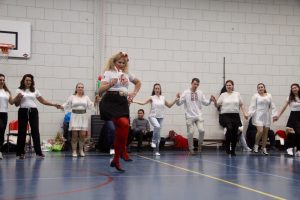
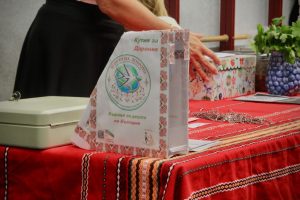
Although the club’s agenda is usually filled with performances at local and international festivals, its dancers hosted a charity fundraiser as part of the larger initiative “Angels for Bulgaria” on November 1st this year. “Хорото на Доброто” (roughly translating to “The Dance of Goodness”) spanned across 13 countries with over 67 participating teams. In Rotterdam, an afternoon of dance, a violin performance, activities for the little ones and a wide selection of treats contributed to a total of 19 000 euros collected from all countries. The profits will soon fund Bulgarian children who wish to develop creatively or academically but lack the resources to do so.
Coincidentally, the event took place on a national holiday and the second voting round for the country’s presidential elections. In times of immeasurable polarization, seeing familiar faces from the polling station at the fundraiser served as a reminder of our need for unity – something that music as a cultural element achieves seamlessly. Throughout history, music has consistently united people for larger causes, be it the eruption of jazz and blues during the American Civil Rights Movement, the punk scene in the 70s, or the voices of the Arab Spring.
Bulgaria is no exception to this cultural overlap, from the post-communist ‘New Wave’ to rappers as MPs and artists owning a foundation for children with SEN. It’s worth noting that the European Parliament is the current workplace of famous rapper Itzo Hazarta, who in similar fashion has organized charity concerts and recently moved forward with an EU funded program for children in need. Not all Bulgarian artists who entered politics have had such success, but that’s a story for another time.
In the grand scheme of things, all of these examples demonstrate that being an active citizen can take various forms and is possible even when abroad. When cultural elements are incorporated in the process, it becomes easier to bring people together and contribute to common goals. Keep this in mind when you want to make a change and channel your efforts where they matter!
Author: Kristina Dimitrova